Beers of the World
By Noah Davis • Feb 18th, 2009 • Category: real beerIn today’s globalized world, nothing is from around here anymore. Our chocolate comes from Switzerland, our sea bass from Chile, and our beer from a passel of exotic locales — Amsterdam, Sydney, Dublin, Milwaukee.
While there are certainly some negatives to this — increased carbon emissions, questionable labor practices, and all the other things locavores rail about at the farmers market — the positives often make us forget them. Or at least look the other way while we devour another Lindt truffle. When it comes to beer, the expanded “import” section in the fridge is a decidedly tasty development. It means we can drink Reissdorf Kolsch with our liverwurst and Leffe Blonde with our moules frites, just to name a few scenarios.
But there’s a problem. Namely, the mad men on Madison Avenue get involved. Next thing you know, beer is the liquid embodiment of a place. Corona, for example, is passed off as the quintessential Mexican lager, capable of transporting snowbound schlubs from Buffalo to sunny bikini-filled beaches. Heineken comes with its own European-tailored suit. Mythos is the nectar of the Greek gods.
There’s a disconnect, an ocean-sized gap between mass-marketed perception and reality. For expats here in the States, their so-called national beer can be an embarrassment. They take pity on the poor Americans who think that these brews represent of their homeland.
Hasta La Vista, Corona
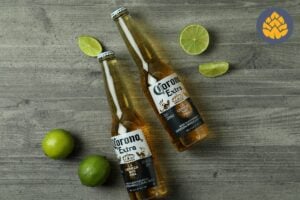
To most Americans, Corona is Mexican beer. Hell, to most Americans who don’t live in Texas, Arizona, or southern California, a bottle of lime-topped Corona on Cinco de Mayo — one of the most successful marketing ploys ever — is as close to a Puerto Vallarta vacation as they’re going to get. Which makes Mexican bartender Fidel Vazquez shake his head in bewilderment.
“I’m not really a big fan of Corona,” says Vazquez, a native of Mexico City who tends bar at funky taco-and-tequila joint Barrio Chino in New York. “It just has more marketing behind it, you know? It’s like Mexican Budweiser.”
In the mother country, Corona isn’t popular at all; the beer of choice is Victoria, which is the Mexican equivalent of the Beast and is generally not exported. (“I think it’s illegal here,” Vazquez claims, “but there is a bodega in the East Village where you can buy it for, like, $12 a pop.”) Vazquez, a diminutive man with spiky black hair and bright brown eyes who calls everyone Buddy, says he drinks only the dark lager Negro Modelo when he’s back home. It’s the best thing to cut through the sweat-soaked heat of the Mexican afternoon.
“On a hot day, we mix it into a michelada,” Vazquez explains. A michelada is a beer cocktail, if you will. Vazquez’s recipe includes a dash of Tabasco, a dash of Worcestorshire sauce, the juice of half a lime, and Negro Modelo, served in a cold glass with a salt rim. “It’s really fucking good.”
Australian for “Light and Girly”
Jason Crew looks like he belongs in the outback: broad shoulders, afternoon scruff, a mischievious glint in his eye. The Brisbane native opened Brooklyn’s Sheep Station, what he calls “an Australian local,” a little more than two years ago with an unstated mission: educate Americans on the many worthy Australian beers that don’t come in blue oil cans.
“Foster’s is the Bud of Australia,” he says on a recent evening. “It’s beer for beer’s sake.”
Crew says very few people back home drink Fosters, especially when there are so many other good options. He points to Sheep Station’s blackboard menu to stress the variety of Down Under quaffs: Forex, VB, and Tooeys are all up there, as are lesser-knowns like Barons Black Waddle and Steinlager from (gasp!) New Zealand. So is what most Aussies consider the champagne of beers, Coopers, a gorgeous sun-colored ale from Adelaide that was first brewed in 1862. Part of its appeal is the company’s independent attitude.
“Foster’s owns the export business,” he claims. “Coopers, though, is a family-owned business, the only non-corporate one, and they can do whatever the hell they want.”
Just then, a young blond woman sits down at the bar. The bartender walks over. “How about something light and girly?” she asks.
Crew, who is standing nearby, smirks. “Get her a Foster’s,” he says.
Luck o’ the Irish
Perhaps no beer represents its brewland more than Guinness does Ireland. From the famous pour to the iconic lyre logo, the 250-year-old dry stout seems to be the Emerald Isle in liquid form. One wonders if the brewmasters sprinkle a few dust particles of the Old Sod into the mix to give it that earthy color.
However, despite its nationalistic character, Guinness avoids the pitfalls of mass-marketing that Corona and Foster’s tumble into so easily. Call it Celtic pride or simply good taste, but the Irish seem offended when someone wonders if Guinness is just a marketing ploy.
“I don’t really know what you’re asking,” says Rocky — “just Rocky” — a publican at the Irish Village in Brighton, a borough of Boston. “Guinness is the national drink back home. Most people drink it.”
Rocky, a native of Connaught, then tosses in a surprise.
“You know what else is big in Ireland right now? Budweiser,” he says. “It’s more expensive there. It’s an import, you know?”
Budweiser is big in Ireland. Wow. There is almost nothing to say upon hearing that. Maybe it’s an anomaly, this taste for Bud, something the many Irish tourists who come here have taken home with them after visiting their cousins in South Boston. Yes, that must be it.
Then you hear Bud’s also big in Greece, of all places, land of wine-filled goatskins and cloudy ouzo. According to Neva Bergmann, an American expat restaurateur on the island of Paros, “you can find Budweiser in all the la-di-da places.” She adds, “I don’t get it.”
– Greg Lalas is a freelance writer in Brooklyn, which, he stresses, is not the Budweiser of New York.


My friends told me about Bud being a big thing in Ireland. They tried it while visiting there, and were surprised that it was GOOD! Apparently it’s served on a nitrogen tap.
I’m from the the same Greek island as Neva, Paros.
She may have mentioned also that the tourists want to drink a Greek beer, Mythos or Alpha, but the locals mostly prefer Amstal–as do I.
Cheers,